Treatment In The Fentanyl Era
By Monica E. Oss, Chief Executive Officer, OPEN MINDS
May 27, 2026
What drug is the leading cause of overdose deaths in the U.S.? Fentanyl has had that distinction since 2017.
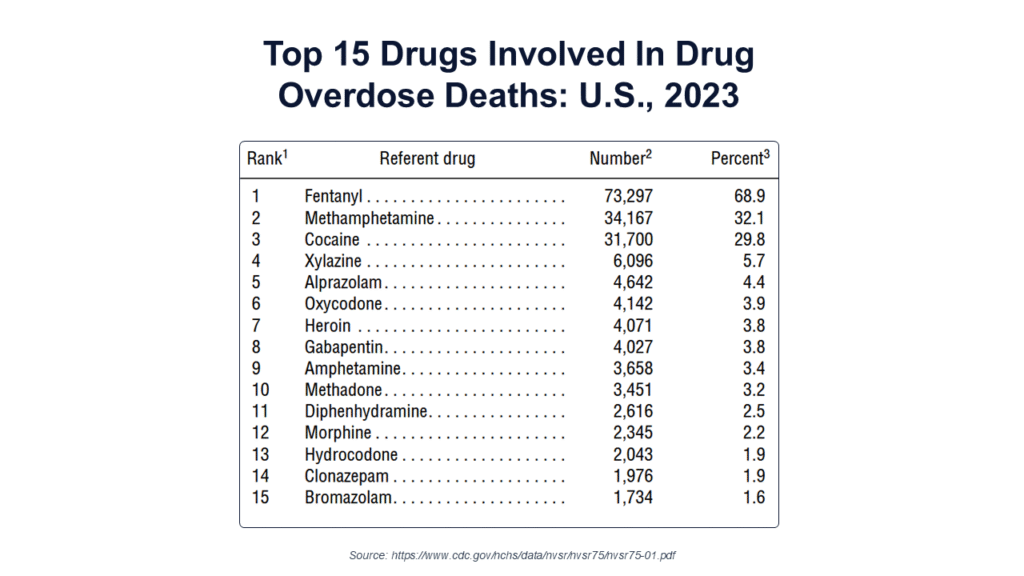
According to a new analysis—Drugs Most Frequently Involved In Drug Overdose Deaths: United States, 2017–2023—since 2017, fentanyl has been the leading cause of overdose deaths in the U.S., over 73,000 per year in 2022 and 2023. This represents 69% of overdose deaths in 2023.
In addition, fentanyl was the most common concomitant substance found in overdoses due to other drugs, ranging from 99.0% of xylazine-involved drug overdose deaths to 48.3% of oxycodone-involved drug overdose deaths. Cocaine and methamphetamine were also frequent concomitant drugs.
Despite the news coverage that drug overdose deaths dropped in 2023 (which they did), the upward trend in overdose deaths continues. The number of drug overdose deaths increased by 53.8% from 70,715 deaths in 2017 to 108,790 deaths in 2022 (and then decreased to 106,352 deaths in 2023). The age-adjusted rate of fentanyl overdose deaths increased from 8.8 deaths per 100,000 in 2017 to 22.7 per 100,000 in 2022, before declining slightly to 22.3 per 100,000 in 2023.
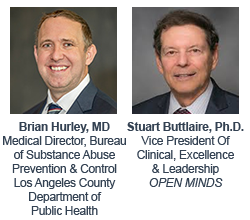
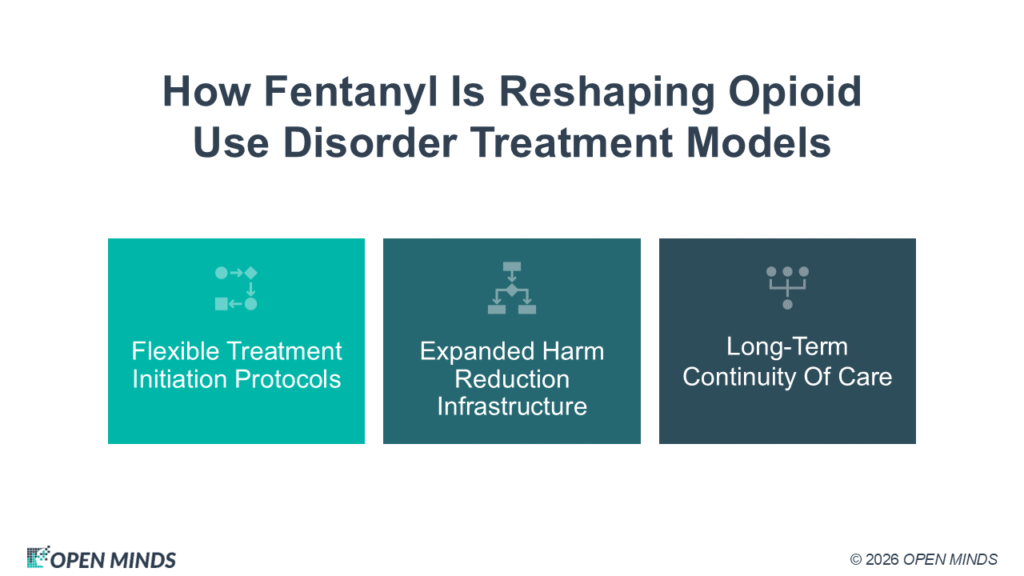
The question for management teams is how to redesign addiction treatment programs for success in an era of increasing use of fentanyl. That was the focus of a recent RECADEMY webinar, Treating Fentanyl & High-Potency Synthetic Opioid (HPSO) Use Disorder: Evidence-Based MOUD Protocols, Induction Strategies, & Harm Reduction Approaches In Real-World Care Settings, featuring Brian Hurley, M.D., medical director of the Bureau of Substance Abuse Prevention and Control (SAPC) at the Los Angeles County Department of Public Health, and my colleague Stuart Buttlaire, Ph.D., OPEN MINDS vice president of clinical excellence and leadership. The discussion focused on three operational shifts needed for success in a fentanyl-dominant treatment environment—low-threshold access models and flexible treatment initiation protocols, expanded harm reduction infrastructure, and long-term continuity of care.
The first requirement is changing access models and treatment initiation protocols. Fentanyl has changed how consumers need to access and start treatment. Standard protocols built for heroin or prescription opioid use may not fit consumers with high fentanyl exposure and high opioid tolerance because fentanyl’s pharmacologic characteristics—including extreme potency, complex tissue retention, and unpredictable presence in the illicit drug supply—increase withdrawal complexity, complicate buprenorphine induction, and raise the risk of early treatment dropout. To ease access to care, our speakers recommend that provider organization managers push for easier entry to treatment programs with universal access to medication-assisted treatment. And they should consider adopting multiple initiation pathways, such as high-dose starts in emergency settings, low-dose starts in outpatient settings, injectable options, and transdermal options for co-occurring pain.
“The shift pushed us to think creatively around how to make sure that care became universally accessible and not gatekeeped behind a whole set of admission requirements. How do we reach the 80% and 95% of people that aren’t in treatment? We make treatment easier. We lower the threshold.” said Dr. Hurley. “I think that for any system that’s thinking about initiating a low-dose buprenorphine strategy, it is to offer people a menu of options. Rather than thinking from a program-centered approach, think from the patient’s perspective, and different patients are going to want different approaches.”
Expanded approaches to harm reduction are another important element in serving consumers using fentanyl. Fentanyl’s extreme potency, unpredictable contamination of the illicit drug supply, and rapid overdose trajectory make traditional treatment-only approaches insufficient. Consumers may lose consciousness within seconds, require multiple naloxone administrations, and cycle repeatedly between treatment engagement and disengagement—making ongoing outreach and overdose prevention infrastructure essential. Core harm reduction “infrastructure” should include access to naloxone, test strips, overdose education, outreach, engagement, and community-based supports.
“Harm reduction interventions and treatment interventions are complementary to each other,” said Dr. Hurley. “How do we blend harm reduction and treatment in a way where everyone has access to overdose prevention, the tools, and resources to keep themselves alive?”
Finally, long-term continuity of care is an essential treatment design requirement for consumers using fentanyl as they transition back to the community via emergency department discharge, residential discharge, hospital discharge, or release from custody. Enhancements to continuity of care for these consumers include systems for immediate access to medications, active care coordination, rapid outpatient follow-up, peer support, housing stabilization referrals, overdose prevention planning, and structured transition management programs.
“The expectation is that people are going to be connected long term to your system of care,” said Dr. Hurley. “Addiction isn’t an infection you can treat with an antibiotic. It’s a chronic medical disease that needs long-term treatment.”
The effects of fentanyl abuse on the U.S. health and human service system are significant and growing—and the design of addiction treatment programs needs to keep pace. As Dr. Buttlaire emphasized, “The organizations succeeding in the fentanyl era are designing treatment systems around sustained engagement, flexible access, and continuity of care—not short-term stabilization alone.”
Want To Read More?
This content is exclusive to RECADEMY members.
RECADEMY is a comprehensive, research-based, online learning collaborative designed to provide critical information about emerging substance use disorder treatment topics and models of care.
Sign in or join the RECADEMY community for free today.